

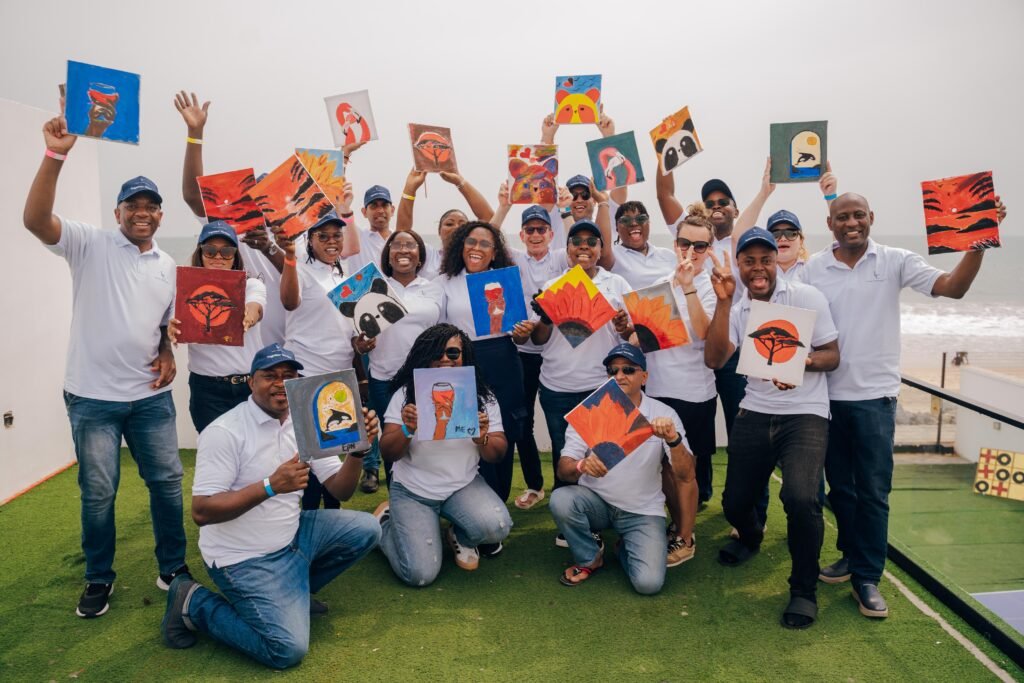



Everyone had fun.
That’s usually how a team bonding session is judged. People laughed, took pictures, ate good food, played games, and went home happy.
But here’s the harder question:
Did anything actually change?
Because a team can have a great day together and still return to work with the same communication problems, the same awkward silences, and the same people struggling to connect.
That’s the difference between having fun together and actually bonding.

Fun is not the same as bonding
There’s nothing wrong with a paintball session, karaoke night, retreat by the pool, or a day of games. People need a break from work, and having fun together has value.
But fun can end when the event ends.
Bonding shows up later.
It shows up when someone feels more comfortable speaking up in a meeting. When two colleagues who rarely interact start working together more easily. When people disagree without taking it personally. When someone steps in to help a teammate because they’ve built a stronger connection.
The goal isn’t to make people have fun. The goal is to create an experience that gives the team something to carry back to work.
So what makes the difference?

Don’t start with, “What team-building activity should we book?”
Start with, “What does this team need?”
Maybe two departments struggle to communicate. Maybe a newly formed team hasn’t found its rhythm. Maybe people avoid giving honest feedback. Maybe everyone has simply been under pressure for months and needs to reconnect.
Once you understand the challenge, you can choose an experience that supports it.
A trust exercise picked because it appears on every retreat checklist is very different from one chosen because your team genuinely needs to build trust.
Showing up isn’t the same as participating.
The strongest bonding experiences create opportunities for people to share opinions, admit mistakes, collaborate differently, or have conversations they wouldn’t normally have at work.
That doesn’t mean forcing everyone into uncomfortable activities.
It means creating enough space for people to move beyond their usual workplace roles.
Sometimes, that’s where the real connection begins.
Every team has them: the people who jump into every game, start every conversation, and naturally become the centre of attention.
Then there are the quieter ones.
If your entire experience rewards the loudest, fastest, or most outgoing people, some team members can spend the entire day participating without ever feeling included.
Good team bonding makes room for different personalities.
The goal isn’t simply to get everyone involved.
It’s to make everyone feel like they belong.
Sometimes the best conversations happen between activities.
On the ride to the venue.
While waiting for lunch.
During a random conversation after a game.
That’s why packing every minute of a retreat with activities can work against you.
Give people enough structure to participate, but enough breathing room to connect naturally.
The activity creates the opportunity.
The conversations around it often create the bond.
A great team bonding session can create a shift, but the workplace has a way of pulling people back into old habits.
That’s why the follow-through matters.
Bring up the funny moment in the next team meeting. Reference something the team discovered about itself. Check in on the conversations that came up. Give people opportunities to apply what they experienced.
The event starts the process.
What happens afterward determines whether it lasts.

Usually, the problem isn’t the activity itself.
It’s the lack of intention behind it.
Someone searched for “team bonding ideas,” picked the activity with the best pictures, and booked it.
It looked great.
It just had nothing to do with the team.
When leaders skip the experience entirely, employees can read that as a lack of importance.
But when leaders dominate every activity, the usual workplace hierarchy simply follows everyone outside the office.
Good experiences create room for leaders to participate without taking over.
Activity after activity. No breathing room. No real conversations.
Ironically, the moments that weren’t on the agenda can sometimes create the strongest connections.
If you don’t know what you want to change, how do you know whether the experience worked?
“Everyone had fun” is a perfectly valid outcome.
It just shouldn’t be the only one.
A team can learn a lot from games and activities, but the experience becomes more valuable when people can connect it to how they actually work.
The question should always be:
“What can we take from this experience back into the workplace?”

There’s no magic number.
A team doesn’t automatically need a retreat every quarter, and one annual end-of-year party doesn’t suddenly create a strong team.
Think about bonding as a rhythm rather than a once-a-year event.
A team going through a merger may need intentional connection now.
A team that has spent six months buried in a major project may need to reconnect.
A growing team may need an experience that helps new and existing employees find their footing.
The need should determine the experience, not the calendar.
What do we want to be different about this team afterward?
Do you want people to communicate better?
Build trust?
Work across departments more easily?
Feel more comfortable speaking up?
Reconnect after a stressful period?
Feel like a team instead of a collection of people who happen to work together?
Start there.
That answer should influence the activity, format, group size, pace, venue, and even how much unstructured time you leave in the day.
Because an experience chosen simply because it looks good on the company calendar will probably feel exactly like that: a nice day away from work.
But an experience designed around what the team actually needs can do something more valuable.
It can change how people relate to each other when they return to work.
The best team bonding isn’t necessarily the most expensive, elaborate, or Instagram-worthy.
It’s the one that makes sense for the people in the room.
At YellowLyfe, we design team bonding experiences around the team, not just the activity. From team games and retreats to fully produced corporate experiences, yellowlyfe create moments that give people a chance to connect, recharge, and work better together.
Because the goal isn’t just to give your team a day off.
It’s to give them a reason to come back closer.
Planning a team bonding experience, retreat, or corporate event?
Reach out to us at brands@yellowlyfe.com.